The menu is a PDF people have to pinch and zoom
A scanned or exported PDF is slow, unreadable on a phone and can't be searched or updated easily.
People looking at a restaurant online want the menu, the location and the hours — fast, on a phone, usually while deciding where to go. A restaurant website should put those in front of them in seconds and make the next step, a call, a booking or an order, obvious.
A scanned or exported PDF is slow, unreadable on a phone and can't be searched or updated easily.
Opening hours, address, directions and the phone number are buried or out of date.
Every price change means re-exporting a file and replacing it everywhere it's used.
Large unoptimised food photos make a site slow exactly where visitors are on mobile data.
Categories, dishes, descriptions and prices as proper pages, readable on any screen and quick to update.
Guests scan a code and browse a menu built for a phone. Ember & Spice, one of our demos, works this way.
Everything a hungry visitor needs, up front, with a map link and a call button.
A simple flow that sends the order or table request straight to the phone your staff already watch.
Your food photos, sized and compressed so the site stays fast without looking flat.
A design drawn from the restaurant's own character — not a template with the logo swapped in.
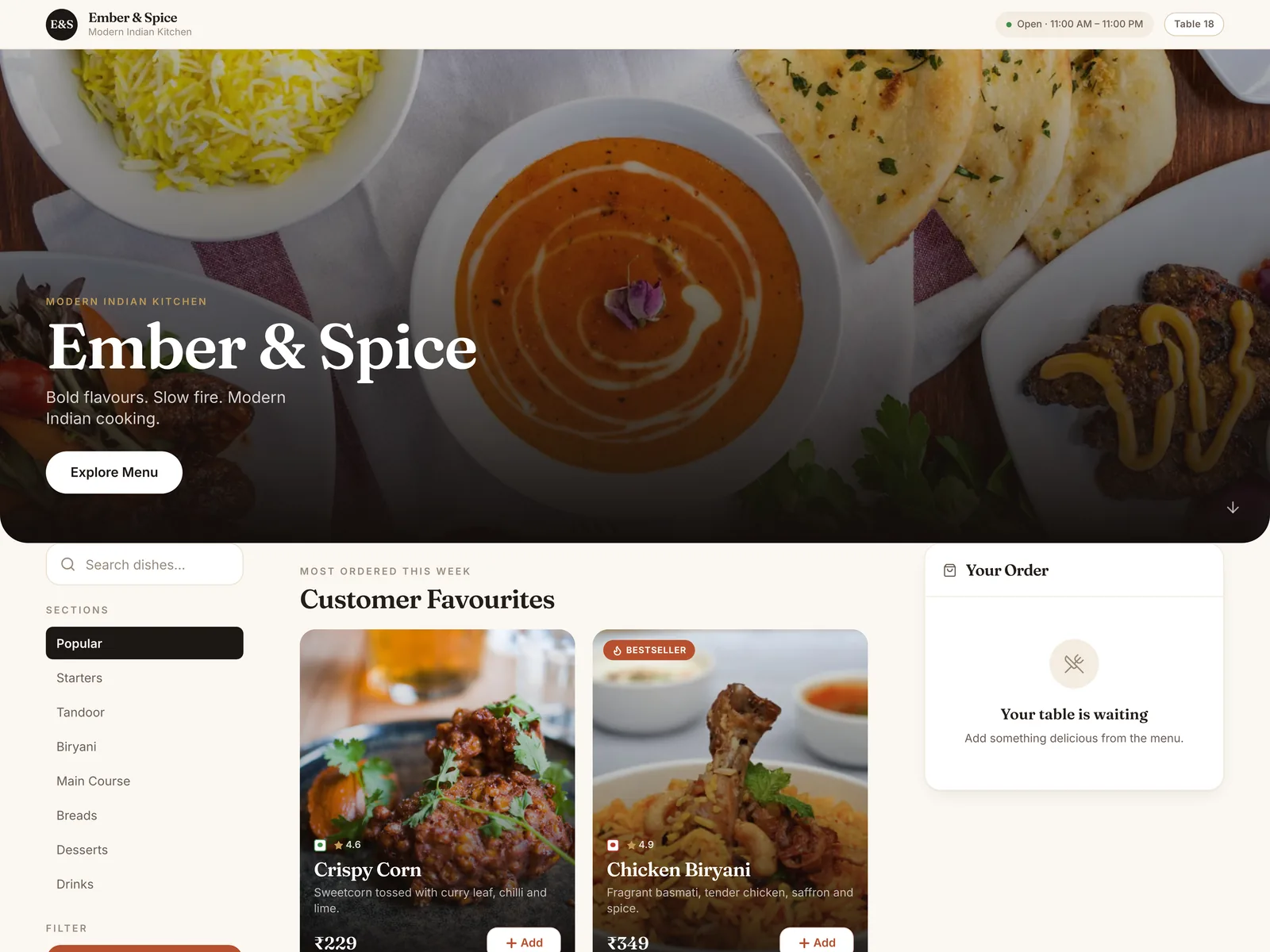
A mobile-first QR menu for a restaurant. Guests scan a code at the table and browse 28 dishes by category, with a detail page for each, in a theme that can be re-skinned for another venue.
Short discovery call, then a written scope and a fixed price before anything starts. You talk to the people writing the code, and the source stays in your name.
Tell us about the restaurant — dine-in, takeaway, how orders arrive today. We'll reply with questions and a way forward.