Visitors can't tell your products apart
Rooftop, pumps, lights and fencing blur together when each one isn't explained on its own page.
Solar is a considered purchase. People read, compare and work out the numbers before they ask for a quote. A solar company's website should explain the products plainly, help a visitor estimate what a system might save, and make asking for a site survey easy.
Rooftop, pumps, lights and fencing blur together when each one isn't explained on its own page.
Without a way to estimate savings on the page, a visitor goes off to work it out and may not come back.
A vague message needs three follow-up calls before anyone knows the location or the roof type.
Policy information changes. Pages that nobody can edit quickly become wrong, and wrong is worse than missing.
Rooftop systems, pumps, lighting, fencing — each explained plainly, with who it suits and what's involved.
A visitor enters a few details and gets an estimate. The page makes clear it is an estimate, not a quote.
Asks for the location, the property type and a phone number, so the first call is a useful one.
Scheme and policy information your own team can keep current without a developer.
A page for finished installations and the areas you serve, in your own words and photographs.
A calm, factual look that suits a purchase people think about carefully.
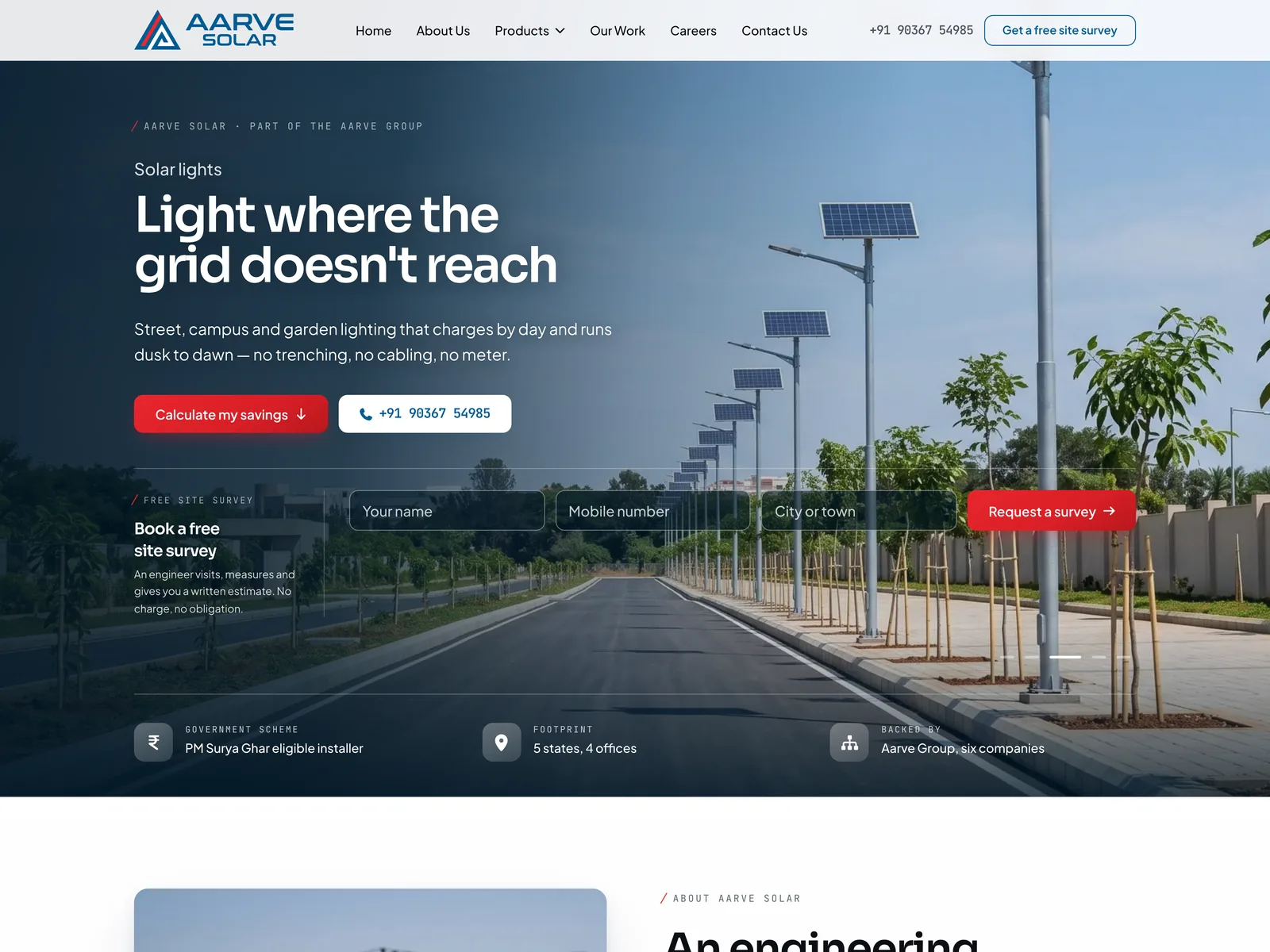
A live service website on the company's own domain. Each product range is explained in plain language, and a savings calculator gives a visitor a reason to book a site survey.
Short discovery call, then a written scope and a fixed price before anything starts. You talk to the people writing the code, and the source stays in your name.
Tell us about the company — product lines, regions, how survey requests arrive today. We'll reply with questions and a way forward.